
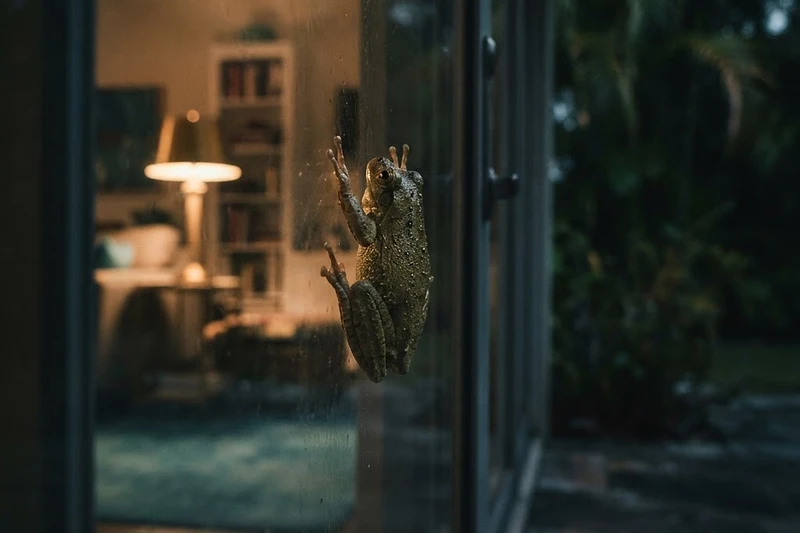
If you've got frogs plastered to your windows at night, it's not the windows. It's the light coming through them.
The real draw
A lit window at night is a bug beacon. The bugs come to the light, and the frogs — especially Cuban tree frogs, which are invasive and loud — come to the bugs. Turn the light off and the bugs leave; the frogs follow.
The bigger problem
Cuban tree frogs aren't just noisy. They secrete a substance that irritates skin and eyes, and they're known to short out exterior fixtures and A/C contactors. In numbers, they're a real nuisance.
Breaking the pattern
Motion-sensor lights instead of always-on fixtures helps. So does a band of granular powder along the base of the wall under the worst windows and around pool-cage thresholds — the frogs avoid the banded routes they use to climb up.
For the full species guide, see our Cuban tree frogs page. Ready to lay the band? Shop the powder or book a treatment.